Kidz ‘n Power: What Bullying Really Looks Like, and What Actually Stops It
July 22, 2026 by KarateBuilt Staff
Free Bullying Prevention Training for Kids and Parents
September 26th, 9am or 11am
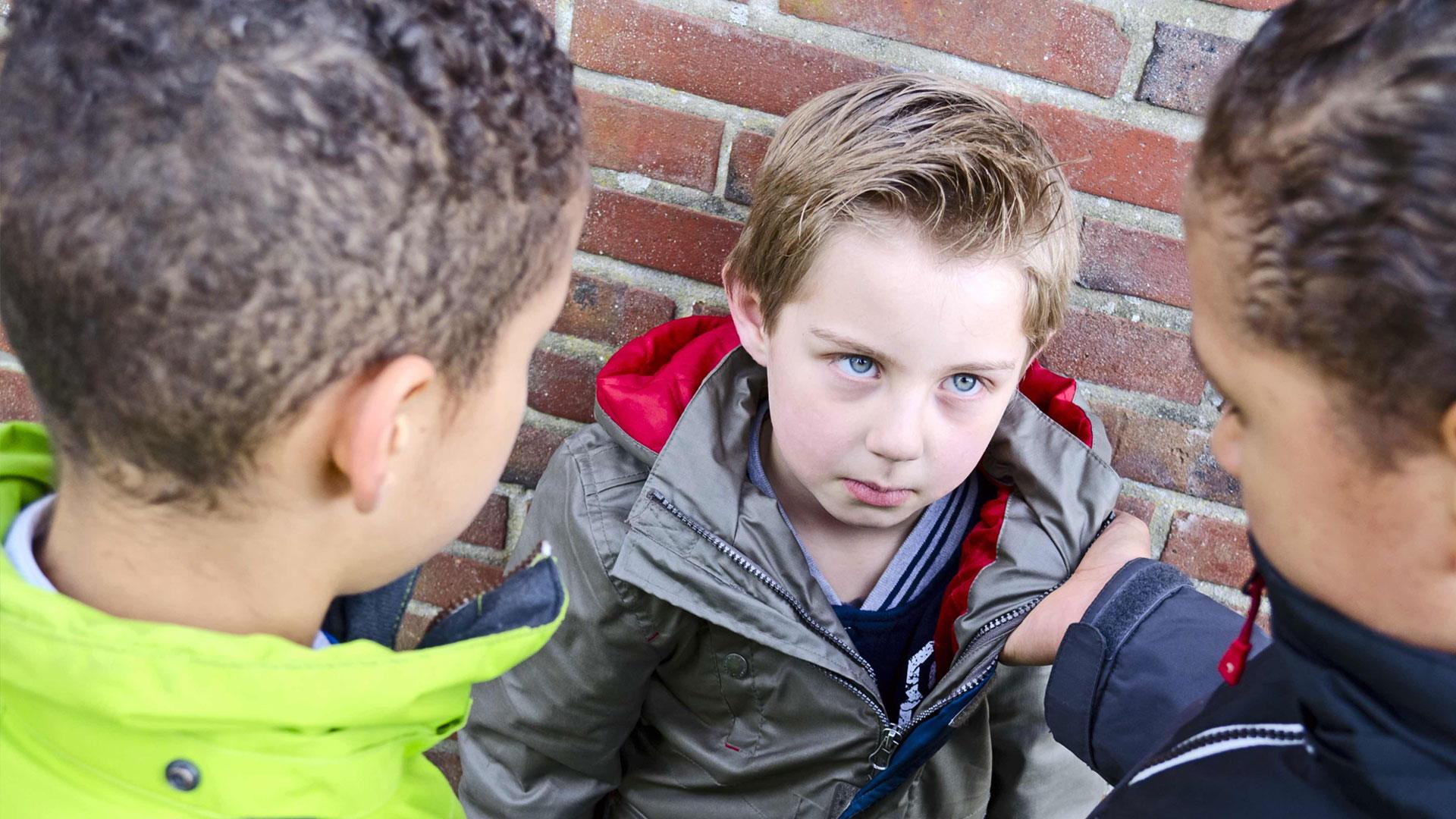
Picture a third grader we’ll call Sam. Every day at recess, a bigger fifth grader trips him, calls him names, and gets a few friends laughing along. It happens fast, so the teacher on yard duty never quite catches it. By the time recess ends, Sam has spent the whole break bracing for what’s coming next instead of playing with his friends.
Ask most parents what to do about a situation like that, and you’ll hear a version of the same advice: stand up for yourself, hit back once, and they’ll leave you alone. Dr. Greg Moody, Chief Master Instructor at KarateBuilt and author of Bullying: Truth, Myths, and What To Do!, has heard that advice for years, from parents, from martial artists, even from other instructors who should know better. His research says that advice rarely works and understanding why changes how you protect your own kid.
What Actually Makes Something Bullying
Kids argue. They shove each other over toys, tattle, break things by accident, and get in each other’s faces. That’s conflict, and it’s normal. Bullying is a different animal, and Dr. Moody’s book lays out a three-part test that separates the two: there has to be intent to hurt, it has to happen repeatedly, and there has to be an imbalance of power.
That last piece is the one adults miss most often. A fight between two kids of similar size and social standing is conflict, even if it’s loud and ugly. But when one kid has more size, more friends, or more social status, and uses that edge to hurt someone smaller again and again, that’s bullying. Teachers, parents, and coaches routinely mistake one for the other, and it changes everything about how you should respond.
Why “Just Stand Up for Yourself” Falls Apart
Here’s the problem with telling a bullied kid to fight back: it ignores the imbalance of power that defines the situation in the first place. If a kid could realistically stand up to the person bullying them and make it stop, the power would already be balanced, and it probably wouldn’t be bullying.
Dr. Moody compares it to advising someone in an abusive relationship to just talk back to their partner, or telling an employee being harassed by their boss to tell them off in a meeting. Nobody would give that advice in those situations, because the power imbalance makes it dangerous, not brave. Bullying works the same way. Fighting back can also get a child suspended at school, since most schools can’t tell the difference between the kid who started it and the kid who finally snapped.
The Data From Martial Arts Schools
Dr. Moody didn’t stop at theory. His research team surveyed 227 kids across 17 states and 22 martial arts schools, using the same questionnaire researchers use to study bullying in the general population. The results surprised even him.
Kids who had just started martial arts got bullied at higher rates than average, about 27 percent of them reported being bullied two or three times a month or more, compared to roughly 14 percent in the general population. Parents had no idea. When surveyed separately, most parents believed their kids weren’t being bullied much at all.
But the picture changes with training. Among kids who’d earned a black belt, typically after three to five years, only about 10 percent reported being bullied that often. That’s a 64 percent drop from where they started, and it beats the results of the best school-based bullying prevention program on record (the Olweus Program, which reduces bullying by around 60 percent under ideal conditions). Kids weren’t just gaining kicks and punches. They were building the confidence and social skills that make them a harder target.
What Kids Can Actually Do in the Moment
None of that confidence comes from a poster on a classroom wall. Dr. Moody’s program teaches specific, practical skills, starting with recognizing what’s actually happening (bullying versus a normal disagreement), then working through how to respond.
One tool is four-square breathing: in for four counts, hold for four, out for four, rest for four. It sounds simple, but it lowers heart rate and helps a kid think clearly instead of freezing. Kids also practice deciding ahead of time what they’ll do if something happens, because a child who’s never thought it through will freeze when the moment actually arrives.
Posture and voice matter too. Standing tall, keeping distance, and speaking in a calm, confident tone (not a scream, not a whisper) sends a different signal than looking scared. And if eye contact feels too hard, looking at someone’s forehead works almost as well and still projects confidence.
Then there’s the piece Dr. Moody says teachers ask about more than anything else: the difference between tattling and telling. Tattling is trying to get someone else in trouble or get attention for yourself. Telling is asking for help because someone needs protection. Kids who learn to say, “I saw John knock Sally’s books down and get his friends to laugh at her, and I think she needs help,” get taken seriously. Kids who just complain in general terms often get brushed off, even when something real is happening.
The Kids Standing Around Aren’t Neutral
Bullying rarely happens between just two kids. Dr. Moody’s research breaks down the roles other kids play once bullying starts, and most of them aren’t the one doing the bullying. Some are active followers who join in without starting it. Some are supporters egging things on from the side, or laughing along, which makes the bullied kid feel worse even if they never touch anyone. Others are disengaged onlookers who genuinely don’t care either way.
Then there are the kids who matter most: the possible defenders, who hate what they’re seeing but freeze because they don’t know what to do or whether an adult will back them up, and the protectors, who actually step in. About two-thirds of kids fall into that defender-or-worse category, wanting to help but stuck.
Martial arts training earns its keep here. Instructors can coach kids toward the protector role directly, teaching them low-risk moves like telling a teacher the right way (not tattling), checking in with the bullied kid afterward, or calmly telling the kid who’s bullying to stop and walking their friend away. None of it requires throwing a punch. It just requires knowing what to do before the moment shows up.
What Parents and Schools Can Do Differently
Believe your child. It took courage for them to tell you and dismissing it or jumping straight to advice can shut the conversation down fast. Get specifics: what happened, when, who was involved, and how often.
One thing Dr. Moody warns against: letting the school sit your child down with the kid who’s bullying them for a “talk it out” style meeting. That works for ordinary conflict. It backfires with bullying, because it puts your child back in a room with someone who already holds more power over them, and it can make things worse. The right question to ask the school isn’t how the other child will be punished. It’s what they’re going to do to keep your child safe going forward.
Join Us for Kidz ‘n Power!!!
KarateBuilt is hosting a free Bullying Prevention event, Kidz ‘n Power, on September 26th, with sessions at 9:00am and 11:00am. You can attend in person or join online, whichever works better for your family.
Kids will work through three things: how to keep from being bullied in the first place, what to actually do in the moment if it happens to them, and how to help a friend who’s going through it. That last piece matters as much as the first two. A kid who knows how to be a protector, not just how to protect themselves, changes the whole environment around them.
Parents get their own track. You’ll learn how to open up a conversation with your kid about bullying without it turning into an interrogation, what to do first if you find out your child is being bullied, and how to walk into a meeting with a teacher or principal and get real answers instead of a runaround. That last skill trips up a lot of well-meaning parents, since most people have never been taught how to advocate for a kid in that kind of meeting.
Reach out to your KarateBuilt location to reserve a spot for the 9:00am or 11:00am session and let us know if you’re bringing friends along so we can plan for the group.
KarateBuilt Martial Arts, 29850 N Tatum Blvd, Ste 105, Cave Creek, AZ, 85331 (480) 575-8171
Chief Master Greg Moody, Ph.D. holds a doctorate in Special Education, is a licensed psychotherapist (LAC), and is an 8th Degree Black Belt with over 30 years of experience teaching children. He has been recognized as the nation’s #1 martial arts school owner eight times.
Sincerely,
Ch. Master Greg Moody, Ph.D.
P.S. Get Dr. Moody’s Book on Bullying – Click Here
KarateBuilt L.L.C. was founded in 1995 by Dr. Greg Moody, an 8th-degree Black Belt and Chief Master Instructor, KarateBuilt Martial Arts and Karate for Kids offer lessons for pre-school children ages 3-6 and elementary age kids ages 7 and up are designed to develop critical building blocks kids need – specialized for their age group – for school excellence and later success in life.
KarateBuilt Martial Arts Adult Karate training is a complete adult fitness and conditioning program for adults who want to lose weight, get (and stay in shape), or learn self-defense in a supportive environment.
Instructors can answer questions or be contacted 24 hours of the day, 7 days a week at 866-311-1032 for one of our nationwide locations. You can also visit our website at KarateBuilt.com.
About Dr. Greg Moody: Dr. Moody is an eighth-degree black belt and chief master instructor. He has a Ph.D. in Special Education from Arizona State University (along with a Master’s Degree in Counseling and a Bachelor’s Degree in Engineering – he actually is a rocket scientist). He has been teaching martial arts for over 25 years and has owned eight martial arts schools in Arizona and California. Chief Master Moody is a motivational speaker and educator and teaches seminars in bullying, business, and martial arts training, around the world. See more at DrGregMoody.com.
The KarateBuilt Martial Arts Headquarters at KarateBuilt LLC is in Cave Creek, Arizona at 29850 N. Tatum Blvd., Suite 105, Cave Creek AZ 85331. You can locate the Chief Instructor, Master Laura Sanborn there directly at (480) 575-8171. KarateBuilt Martial Arts serves Cave Creek, Carefree, Scottsdale, and Paradise Valley Arizona as well as Grand Rapids, MI.